LE DOSSIER
As a stylist, I’m drawn to the way clothes help construct an image: what they reveal, and what they conceal, about the person wearing them. My legal training also leads me to consider intent: to ask why, in the case of an image, the artist chooses this subject, this pose, this moment to convey an idea. I put both of those skills to work at the Marie Antoinette exhibition at Versailles and two shows in Paris, where gowns, expressions and carefully composed scenes invite us to look closely—and question what we think we see.
The women in Sofia Coppola’s Marie Antoinette, Mary Cassatt’s paintings and Eva Gonzalès’s portraits don’t share one temperament. Coppola’s queen is at times exhausted by the performance expected of her; Cassatt’s women claim moments of attention and self-possession; Gonzalès’s women meet the world’s gaze with reserve. What connects them is the gap between the image they present and the emotions they keep to themselves.
Keeping Up Appearances: The Marie Antoinette Exhibition at Versailles
At the Petit Trianon, the Château de Versailles exhibition on Sofia Coppola’s “Marie Antoinette“ marks twenty years since the film’s release. Costumes, props, photographs and film clips are set up in the very rooms where the movie was shot. As a French-history aficionado and a sucker for a well-cut gown set against an unreasonable amount of gold leaf, the film doesn’t just speak to me—it screams. Twenty years on, that pastel fantasy of silk, sugar, satin, and bows is as loud as ever. What I find truly captivating, however, is the quieter story of a young queen facing isolation and the constraints of court life.
The Façade
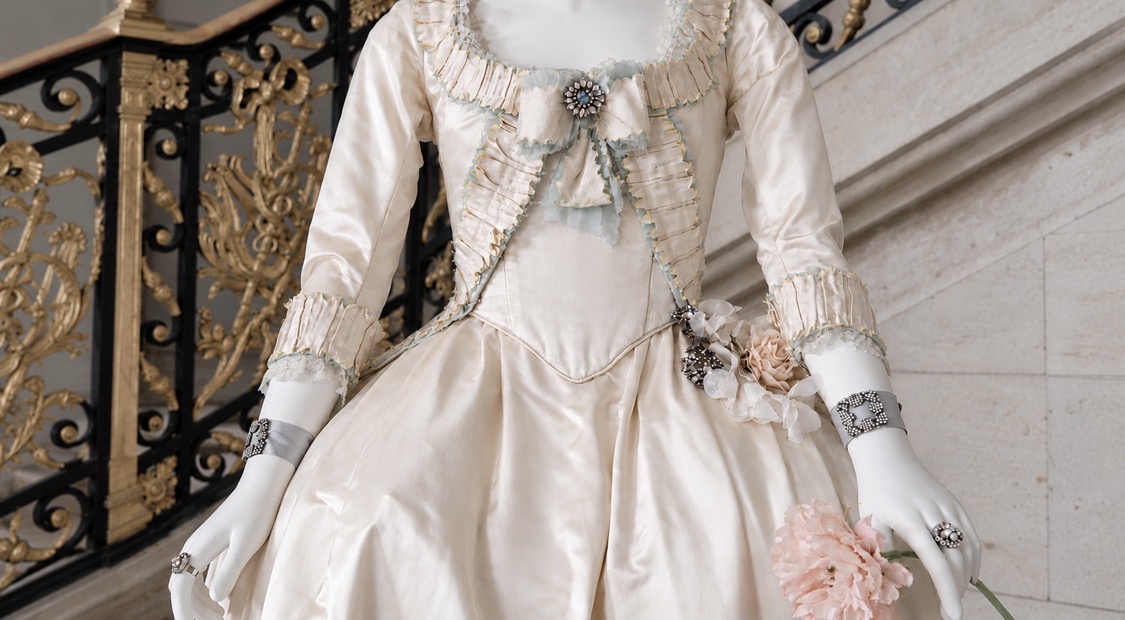
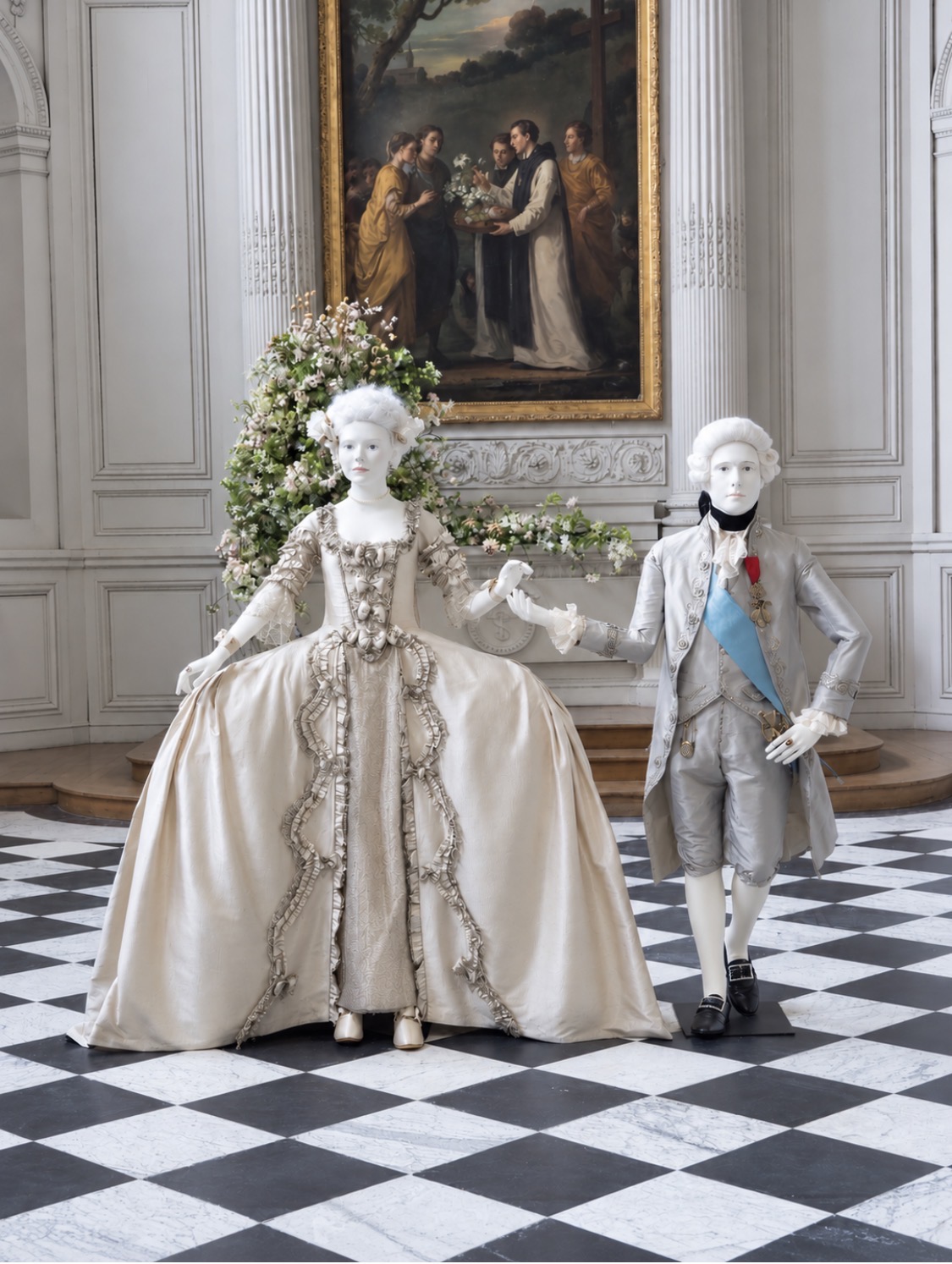
In one room of the exhibition, Milena Canonero’s costumes for Marie Antoinette and Louis XVI stand side by side in full court regalia. In their elaborate dress, the king and queen look every inch the polished symbols of monarchy.
Behind the Scenes
If the costumes show the queen center stage, one scene reproduced from the film takes us behind the scenes: after a night of revelry, Marie Antoinette reclines in an armchair, still wearing the dress and plumes from her soirée. A lavish spread of cakes and pastries—untouched—surrounds her.
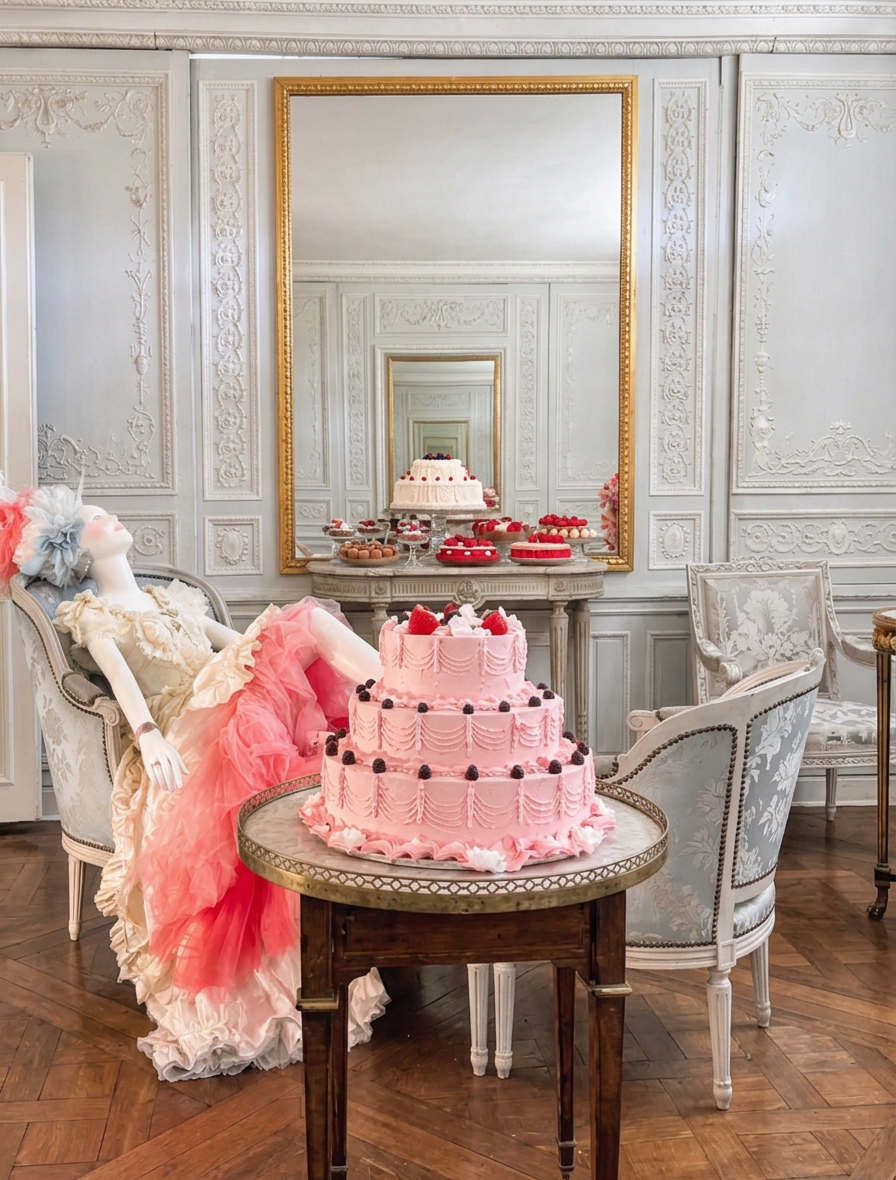
At first glance, this scene confirms the familiar caricature of a queen lost in luxury. But the contrast between the extravagant setting and her collapsed posture tells a different story. Any stylist will tell you that a woman who stays in a corseted, tulle-heavy ball gown after an all-nighter has stopped caring who is watching. Coppola shows us that behind the glamorous, carefully staged queen is a young woman worn down by the demand to perform perfection.
Spectators, Not Spectacles: Mary Cassatt at the Musée d’Orsay
That tension between display and inner life continues in Mary Cassatt’s work, though her women handle it differently. Cassatt, an American in Paris, exhibited with the Impressionists at Degas’s invitation. She painted the women of her own privileged world, and she knew exactly what their clothes were for. The Musée d’Orsay’s retrospective is all about independence. Her women move through modern life on their own terms. They still dress for society, but they have their own agendas.
In the Loge
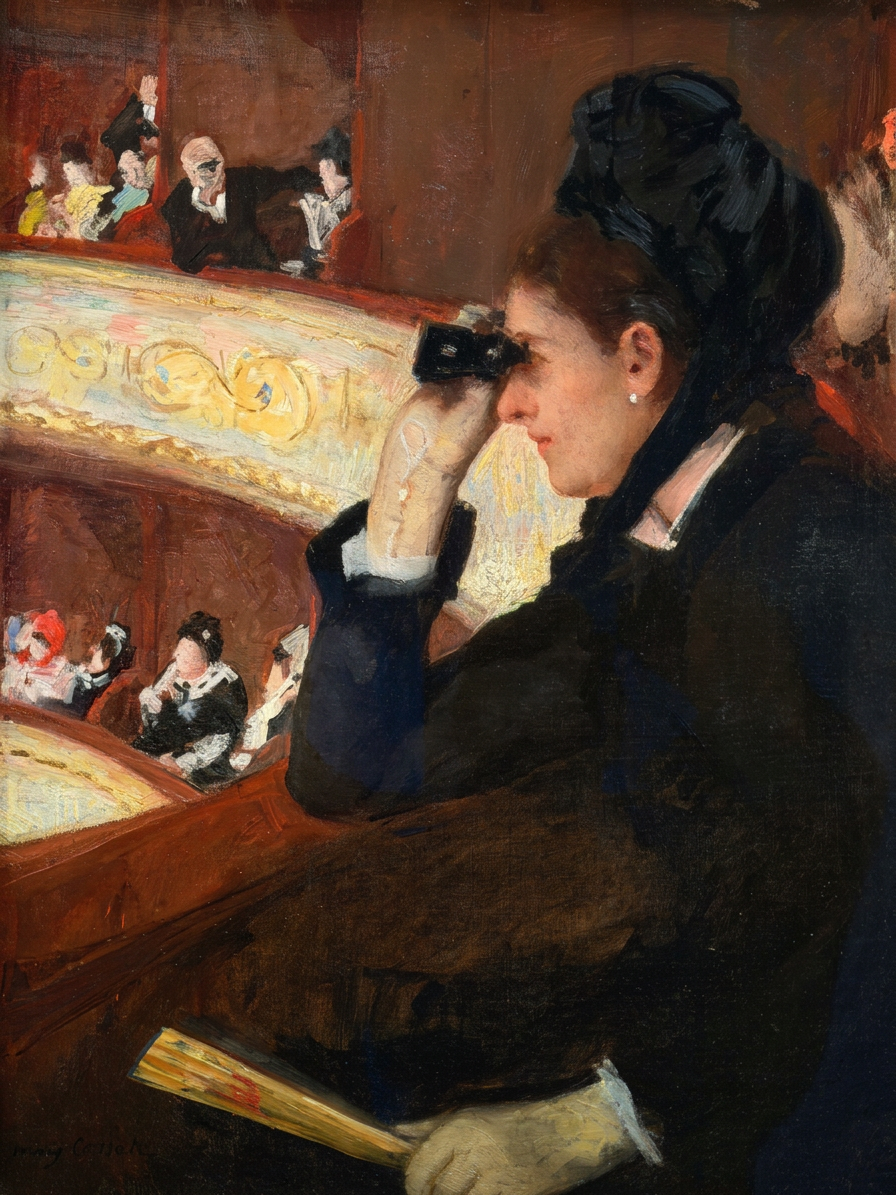
In the Loge (1878) shows a theatergoer resting her arm on the edge of her box, absorbed in her opera glasses. Meanwhile, a man in a neighboring box trains his own glasses on her. Does she notice? If she does, she isn’t letting on. The opera box was a place to be seen, after all, but she has opted out: a plain black dress buttoned to the neck, a gloved hand holding a closed fan. In other words, she has dressed to watch rather than to be watched, and her clothes work almost like a subterfuge. She’s looking, and choosing what to see.
Woman Reading
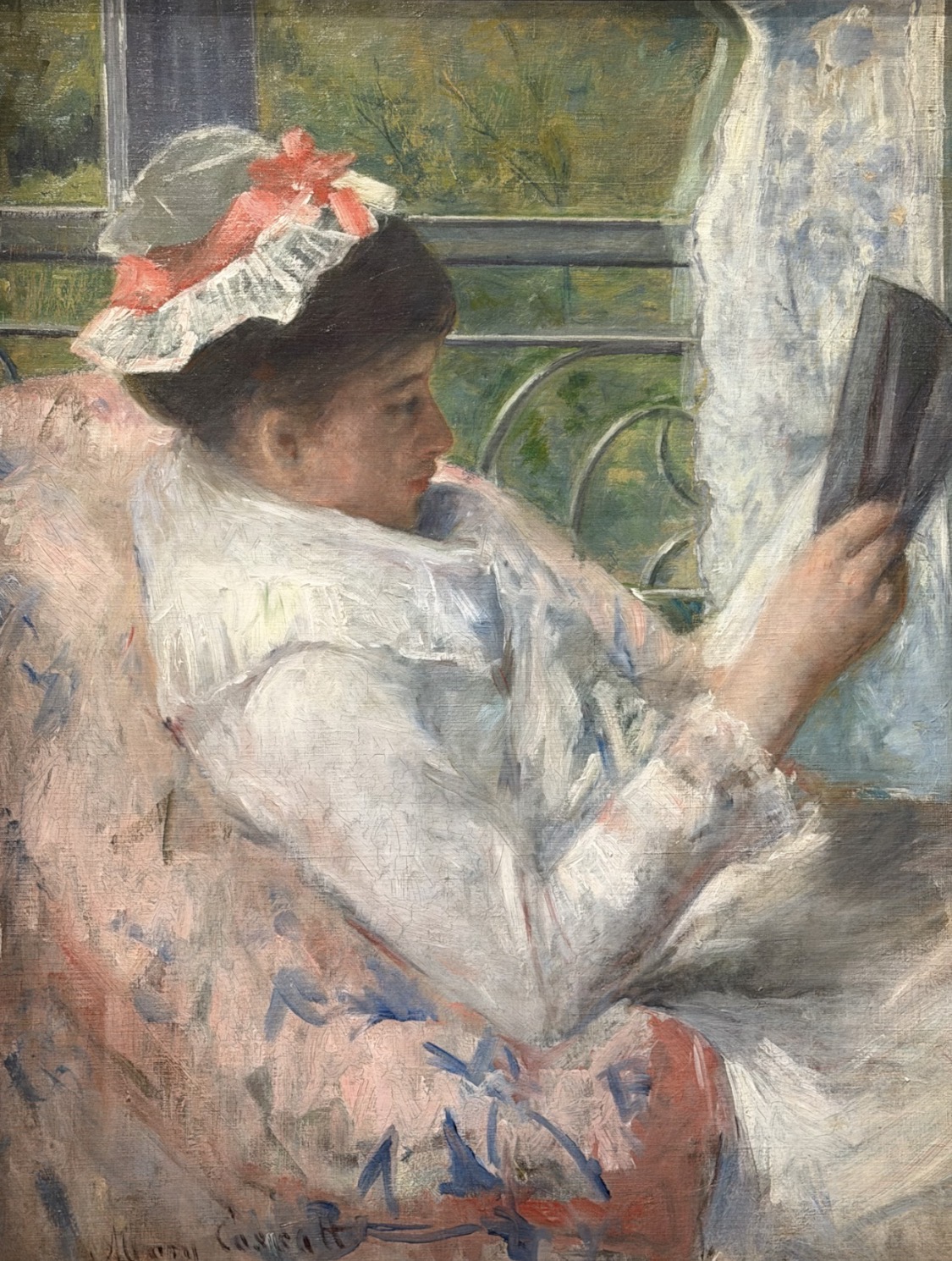
In Woman Reading (1878–79), Cassatt’s sister Lydia goes a step further: she isn’t dressed for anyone at all. Unlike the queen, still laced into her ball gown at dawn, Lydia has changed into “house clothes,” a white morning dress and a lace cap with a coral bow, the kind women of her day wore only at home among family. (the nineteenth-century equivalent of lounge wear). Her clothes catch our eye, but her attention is on the page. With no audience to dress for, she is free to be absorbed in something of her own. The quiet act of reading becomes a form of self-possession.
Reserved Judgment: Eva Gonzalès at the Petit Palais
At the Petit Palais, the exhibition Eva Gonzalès. Parcours d’une artiste libre (Eva Gonzalès: The Journey of a Free Artist) brings us back to the theater and private settings, but with a different kind of tension.
A Theater Box
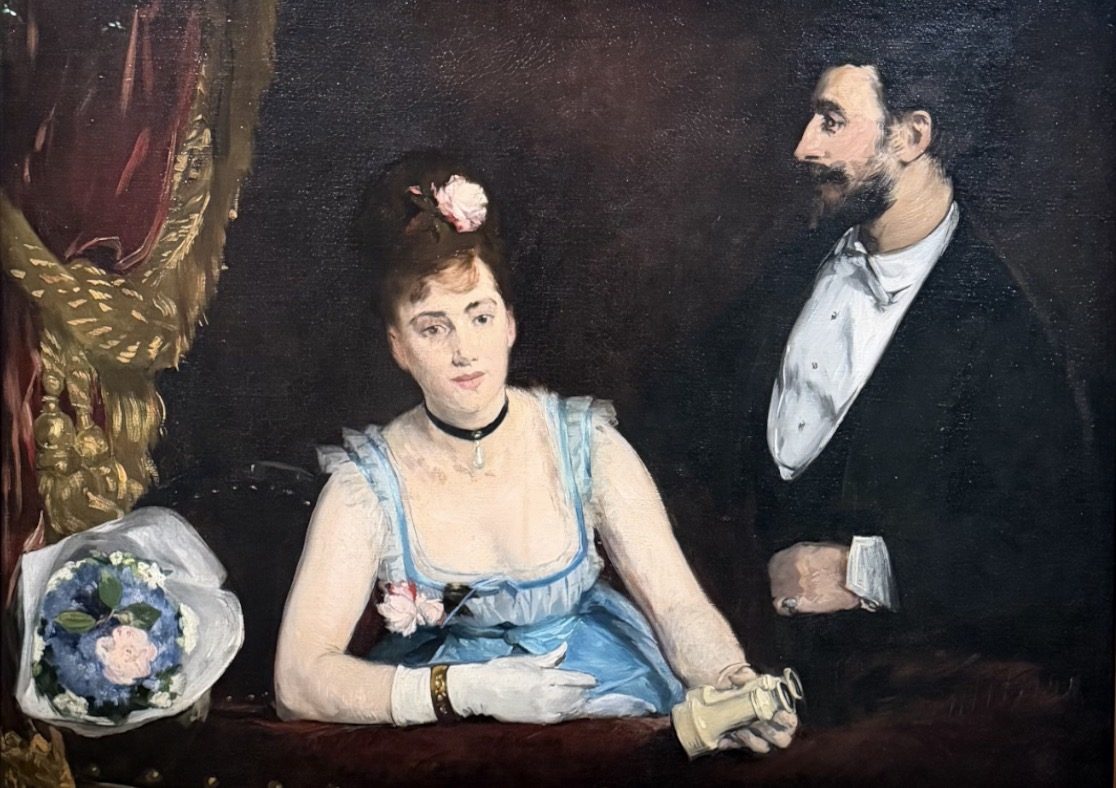
In Une loge aux Italiens (A Theater Box at the Italiens, c. 1874), a woman shares an opera box with a man without sharing his experience. She has dressed for the occasion down to the last detail: a blue gown, white gloves, a black choker, a rose in her hair and another at her bodice. He looks off across the theater; she looks straight out at us, opera glasses lowered, her expression giving nothing away. He looks toward her; her expression remains difficult to read. A bouquet rests on the ledge nearby, but she does not appear to be particularly interested in it, or the man, for that matter. Gonzalès leaves the exchange unresolved.
Indolence
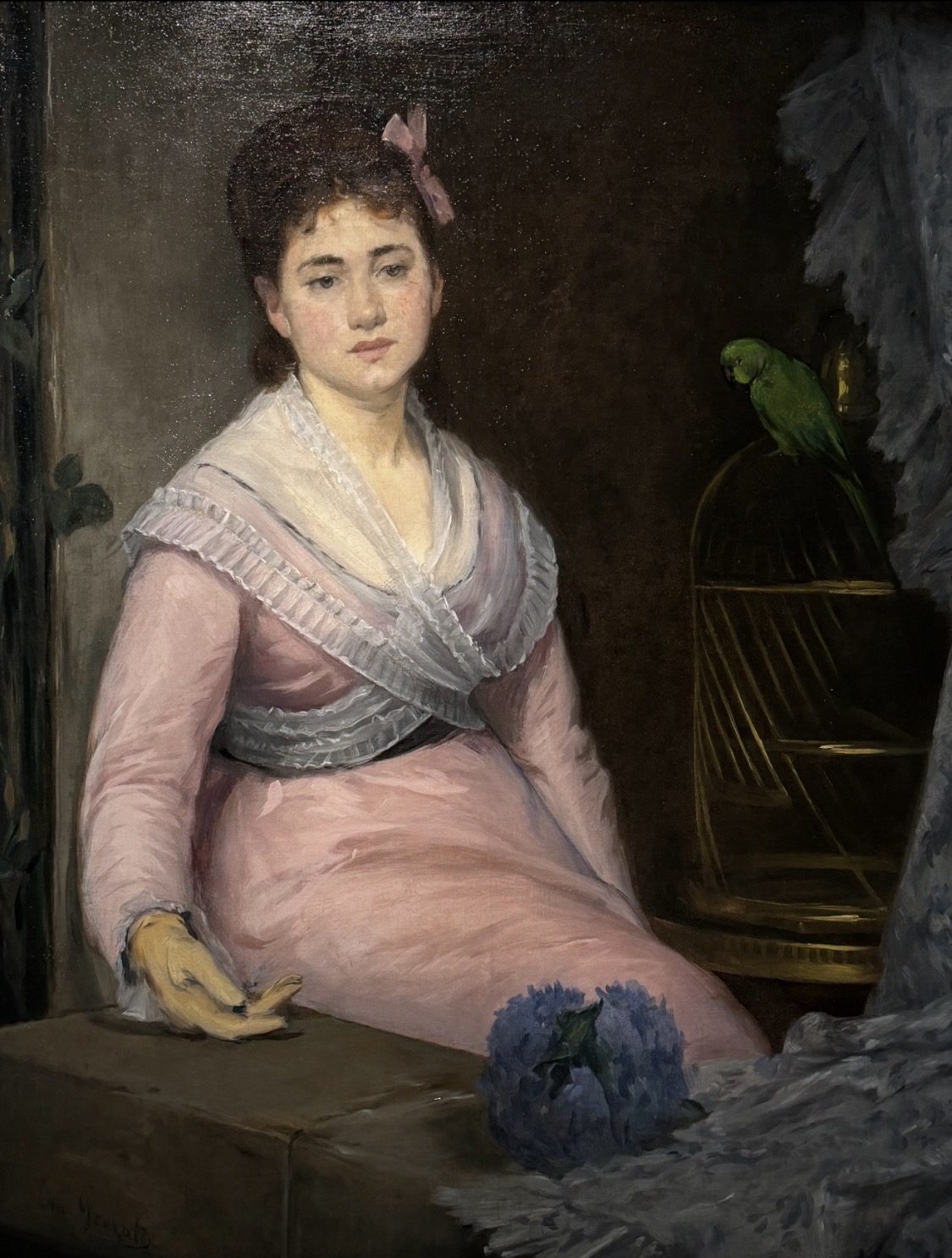
That reserve is even stronger in Indolence. A young woman in a pink gown sits slumped, her gaze plaintive; beside her, a parrot perches on top of its cage. The bird could fly off, and doesn’t. Two kinds of confinement, side by side: one chosen, one social. Her appearance suggests that she is going or has been somewhere, but her expression isn’t telling us whether the outing is a pleasure or a chore. Either way, luxury starts to feel less like ease than like a gilded enclosure.
Final Thoughts
Ultimately, Coppola, Cassatt and Gonzalès understood that dress can say a great deal while the woman wearing it says nothing at all. A queen slumped in her plumes, a theatergoer watching the crowd instead of the stage, a young woman in pink who won’t tell us what she’s thinking: these artists use fashion to reveal—and conceal—the inner lives of their subjects.
Dress or disguise? Look long enough, and it’s both.
À très vite,

Le Dossier (Fr., the case file) is a monthly deep dive into the stories behind what people wear, one case at a time.
Plan Your Visit: Exhibition Dates and Tickets
Marie-Antoinette by Sofia Coppola, Petit Trianon. Through January 24, 2027. Official site.
Mary Cassatt, Musée d’Orsay. Through January 31, 2027. Official site
Eva Gonzalès, Petit Palais. Through January 24, 2027. Official site
Love this? Get Le Bon Ton, my weekly newsletter, in your inbox. Subscribe here →